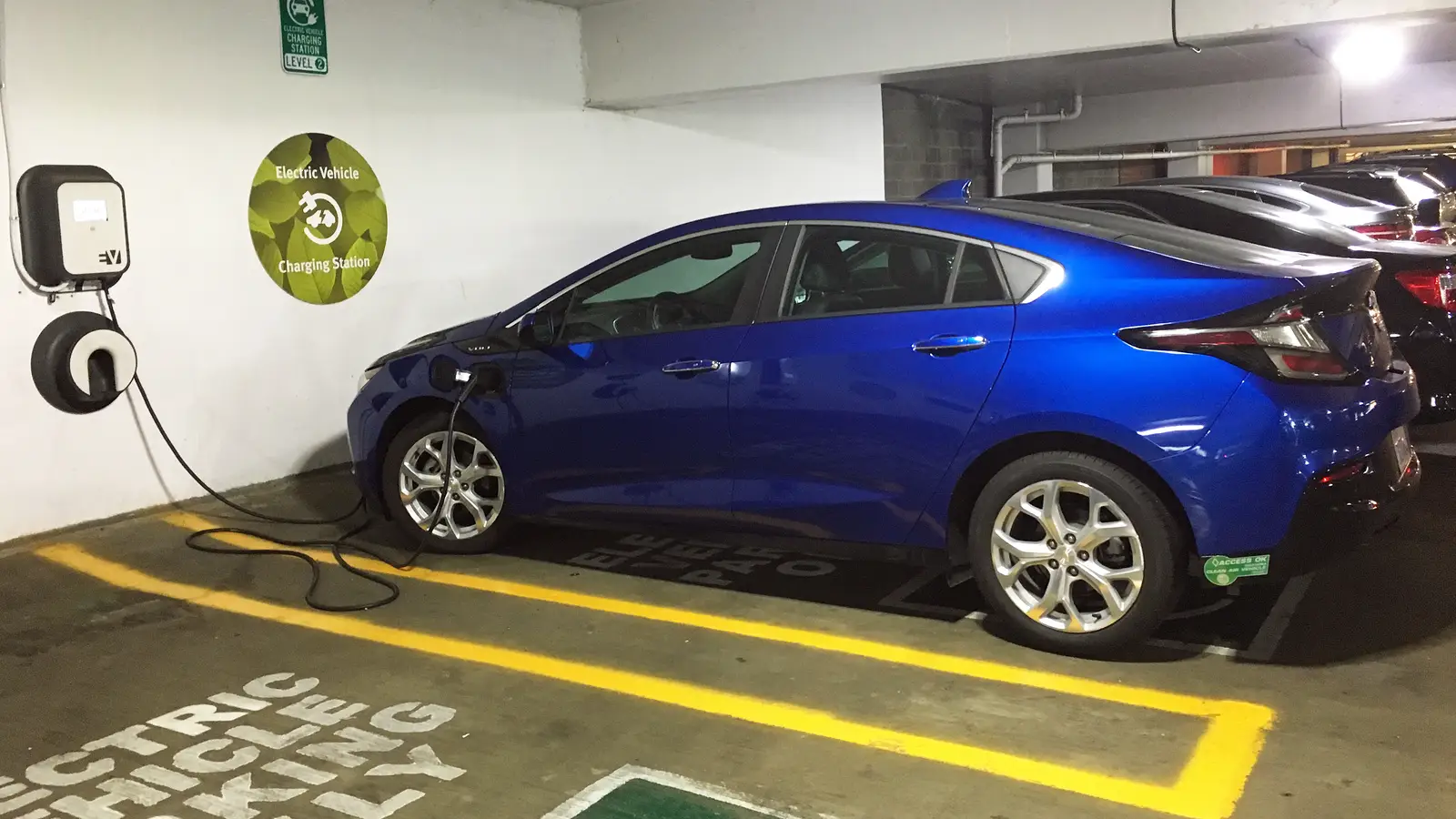
Charging at Arlington County's 51 public ports goes from 17.46 cents to 30 cents a kilowatt-hour. A 40 kWh charge rises from $6.98 to $12. See which sites are affected.
Charging an electric car at an Arlington County charger is going to cost 72% more. The County Board adopted an ordinance that raises the base fee from 17.46 cents to 30 cents per kilowatt-hour. The county reported the vote in its October 2026 County Board wrap-up.
The new rate covers the county’s 51 public charging ports. It does not apply to chargers run by stores, garages or apartment buildings.
Why the price is going up
The board directed that the fees cover “the capital costs of the chargers and reflect increased electricity costs,” the wrap-up said. The county gave two figures for the electricity side:
- The power prices the county buys through the Virginia Energy Purchasing Governmental Association rose 25% across the system at the start of fiscal 2027.
- The accounts that supply the public chargers rose 23%.
What a charge will cost
The table applies the old and new per-kilowatt-hour rates to sessions of three sizes. These are our calculations from the county’s rates, before any dwell fee or contractor fee.
| Energy added | Old rate (17.46 cents) | New rate (30 cents) |
|---|---|---|
| 10 kWh | $1.75 | $3.00 |
| 40 kWh | $6.98 | $12.00 |
| 60 kWh | $10.48 | $18.00 |
The county’s public EV charging page also lists a dwell fee of $3 an hour, capped at $25. It applies to a car left plugged in after it finishes charging.
Where the county’s chargers are
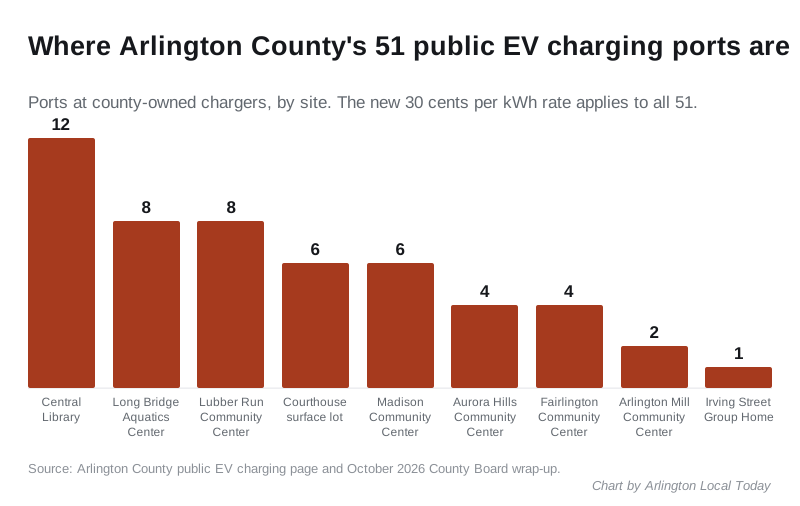
The county’s charging page lists these sites and port counts:
- Central Library: 12
- Long Bridge Aquatics Center: 8
- Lubber Run Community Center: 8
- Courthouse surface parking lot: 6
- Madison Community Center: 6
- Aurora Hills Community Center: 4
- Fairlington Community Center: 4
- Arlington Mill Community Center: 2
- Irving Street Group Home: 1
More changes the board asked for
Board member Takis Karantonis made a second motion, seconded by board Chair Matt de Ferranti. It directs the county manager to:
- review the contracts with charging companies and negotiate changes so drivers do not pay contractor fees on top of the county’s fees
- look at whether the chargers can apply the maximum dwell fee per calendar day
- bring back changes to the ordinance when the contracts and technology allow
The county’s charging page already warns that ChargePoint has added its own service fee at ChargePoint stations, which the county does not set or waive. The wrap-up did not report the vote counts on the ordinance or the second motion.
What it means for you
- If you charge at a county site, expect to pay 30 cents per kilowatt-hour. The wrap-up does not give a start date. On Tuesday, the county’s charging page still listed the old 17.46-cent rate.
- Check the price on the charger or app before you plug in, since a contractor fee can come on top of the county rate.
- Move the car when it is done. The $3-an-hour dwell fee starts after charging ends.
Parking at the charger may cost extra too. The county’s page says parking is no longer included in the charging transaction, and that parking fees, where they apply, are paid through ParkMobile. Our getting around Arlington guide covers parking and transit across the county.
Frequently asked questions
How much does it cost to charge at an Arlington County EV station?
The County Board adopted a new base fee of 30 cents per kilowatt-hour in October 2026, up from 17.46 cents. A dwell fee of $3 an hour, capped at $25, applies when a car stays plugged in after charging.
When does the new Arlington EV charging rate start?
The county’s Oct. 24 wrap-up of the vote does not give a start date. On Tuesday, Oct. 27, the county’s public charging page still listed the old rate of 17.46 cents.
Where are Arlington County’s public EV chargers?
The county lists 51 ports at nine sites. Central Library has the most with 12, and Long Bridge Aquatics Center and Lubber Run Community Center have eight each.
Have your say